



In the Dodecanese, where the Aegean becomes calmer and more contemplative, lies Patmos — the island where, according to tradition, John the Evangelist wrote the Book of Revelation (the Apocalypse), the last book of the New Testament. Declared a “Holy Island” by law, Patmos combines unique spiritual significance, a UNESCO World Heritage Site, with the architectural beauty of the Aegean and calm, crystal-clear beaches.
Religious Interest: The Cave of the Apocalypse and the Monastery of St. John
The heart of Patmos’s religious significance is the Cave of the Apocalypse, the place where John is believed to have received the vision of Revelation and dictated the text to his disciple Prochorus. The cave, converted into a small chapel, remains a living place of pilgrimage, with spots in the rock that tradition links directly to the miracle.
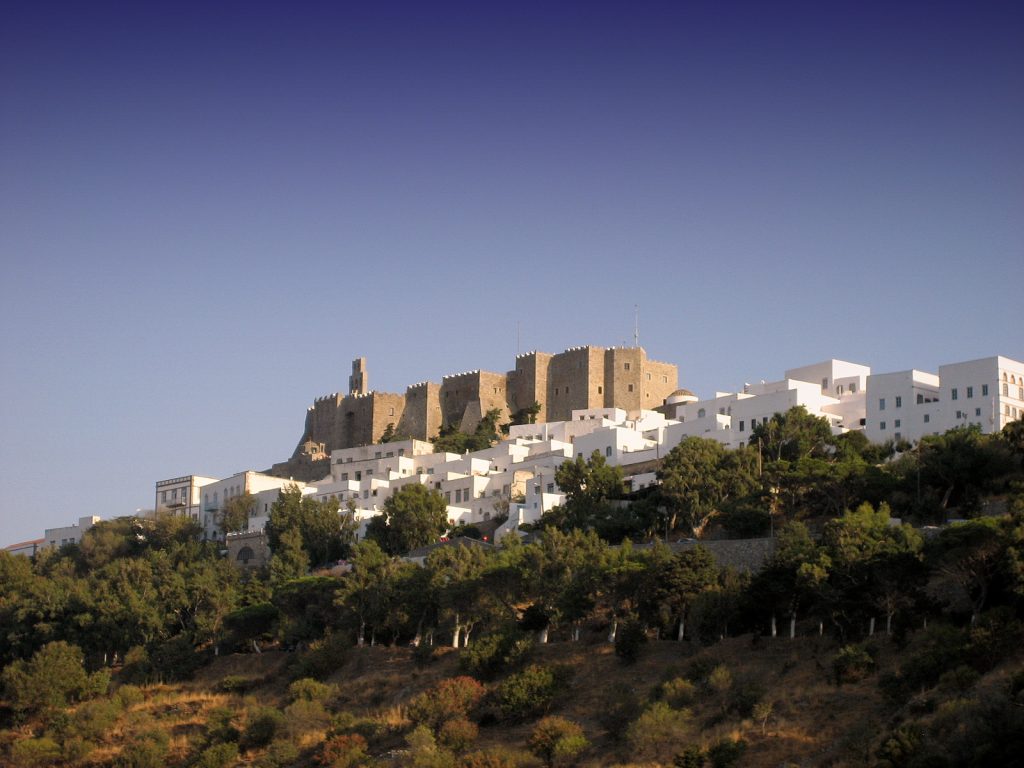
High on the hill above Chora stands the imposing Monastery of St. John the Theologian, founded in 1088 in the form of a fortified castle — an architectural choice that protected it from centuries of pirate raids. Its interior hides a priceless treasure: Byzantine frescoes, one of the richest manuscript libraries in the world, with rare texts and codices dating back to the 5th century, as well as priceless ecclesiastical relics. The monastery, together with the Cave and the medieval settlement of Chora, is a UNESCO World Heritage Site.
The Chora of Patmos, built around the monastery, has dozens of small churches and chapels scattered among its lanes, adding to the atmosphere of spiritual calm that characterises the whole island.
Architectural and Historical Interest
The Chora of Patmos, with its white mansions, narrow cobbled streets and medieval layout around the castle-monastery, is one of the best-preserved medieval settlements in the Aegean. The combination of fortified architecture and island aesthetics creates a unique setting, ideal for walks in the early morning or late afternoon, when the light colours the white buildings.
Natural Landscape: Calm Beaches and a Serene Setting
Patmos does not have the wild, dramatic terrain of other islands, but a calmer, more gentle beauty. Beaches such as Psili Ammos, reachable by boat or on foot, Lambi with its colourful pebbles, and Grikos with its quiet little harbour offer clear waters and a relaxing atmosphere away from mass tourism. The green countryside, with olive trees and vineyards, completes the island’s serene landscape.
Gentle Tourism: Hiking and Sea Excursions
Old paths link Chora with the surrounding villages and beaches, offering opportunities for peaceful hiking with a spiritual dimension, as many routes pass by chapels and hermitages. Exploring the island and the nearby uninhabited islets by boat is a popular activity, while the calm waters around Patmos are perfect for swimming and relaxed boat trips.
Gastronomy: Simplicity and Authenticity
The cuisine of Patmos keeps a simple, traditional character, in harmony with the island’s spiritual identity. Local dishes such as Patmos pitakia (small cheese pies), fresh seafood and local honey are key elements of the culinary experience. Tavernas in Chora and Skala, the island’s port, serve authentic dishes made with local produce, usually in a quiet, family-run setting.
Why Patmos Deserves Your Visit
Patmos offers something rare among the Greek islands: a destination where spirituality is not just another attraction but the core of its identity. For those seeking a deeper, more contemplative travel experience, combined with medieval architectural beauty and calm, crystal-clear beaches, the Holy Island of the Apocalypse offers an experience that goes beyond ordinary tourism.
Photo: Chris Vlachos / Wikimedia Commons, CC BY 3.0 (source)
